A concert with one tour date sells itself on urgency. Buy now, or miss it forever. A residency has no last chance. The show runs nearly every night, with no closing date on the calendar, which means the urgency that moves most live events simply is not there. Demand has to be built and rebuilt, week after week, for an audience that is never the same twice.
Nowhere is that harder than Las Vegas. On the Strip, a show is not just competing with other shows. It is competing with every restaurant, club, pool party, and table game within walking distance, for two completely different audiences at once: the visitor who booked a trip weeks ago and is mapping out their nights, and the person already on the Strip deciding what to do in the next two hours.
One channel reaches both of them at the exact moment they are deciding. This is how we used Google Search to keep a residency full, and why it returned 31.1X on ad spend.
The Client: A Residency Built on Recognition
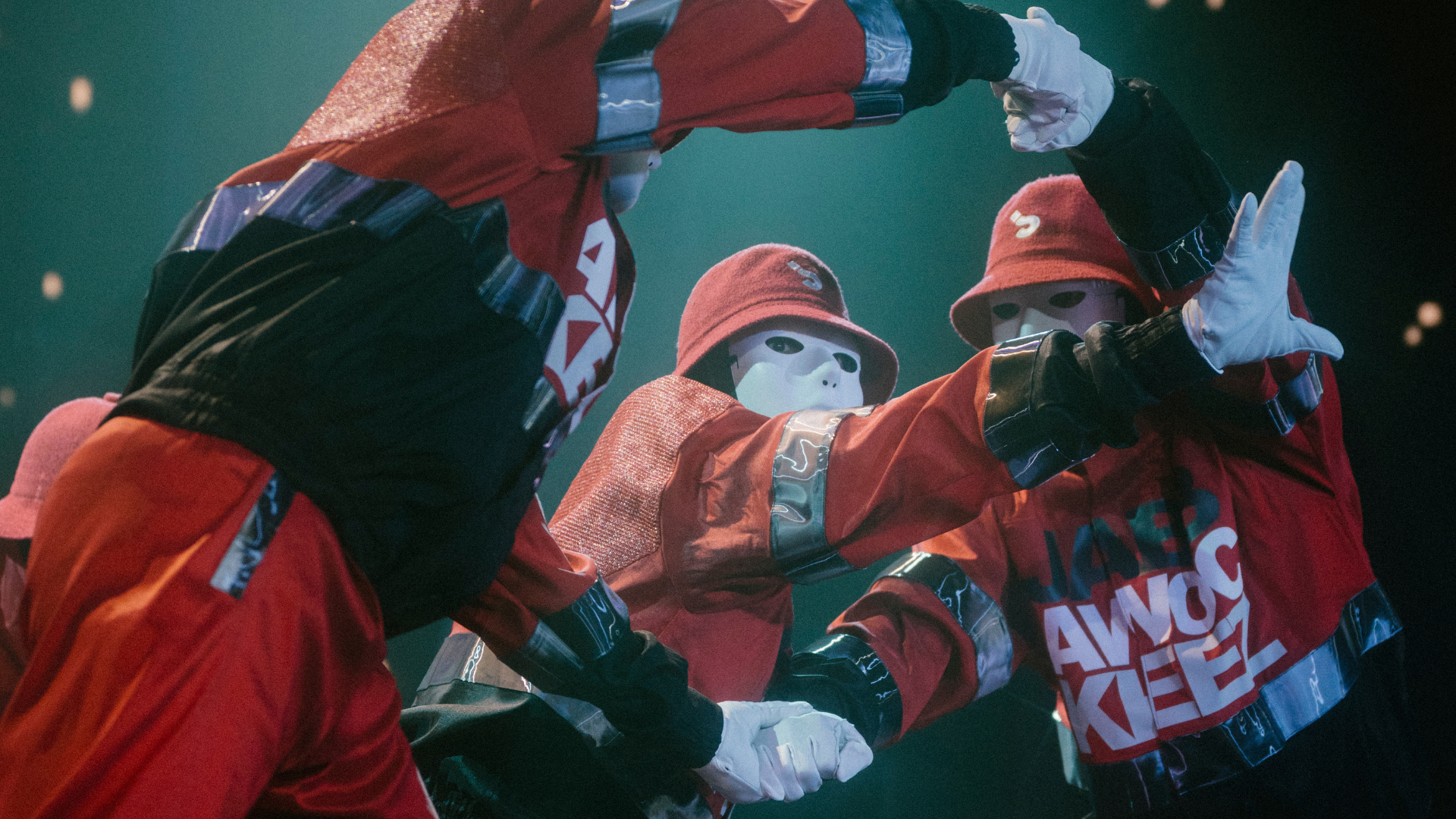
The JABBAWOCKEEZ are not a new name. The masked crew won the first season of America’s Best Dance Crew, became the first act of their kind to headline a Las Vegas venue, and have held a Strip residency for more than a decade. The white masks and gloves are about as recognizable in Vegas as a rhinestone jumpsuit.
FREQNCY is their show at the MGM Grand, a high-energy hour of world-class choreography, comedy, and visual effects set to a genre-spanning soundtrack, performing nearly every night of the week. It has been voted a best all-ages production in Las Vegas year after year. The recognition is already there. What recognition does not solve is filling a theater every single night, indefinitely.
The Challenge: Marketing a Residency With No Closing Night
A residency breaks the playbook most event marketing is built on. There is no on-sale moment, no final week, no countdown to create pressure. The show is always available, which sounds like an advantage and is actually the hardest part. Without a deadline, there is nothing to push a casual maybe into a purchase today.
On top of that, we were selling to two audiences that behave nothing alike. Locals and visitors already on the Strip are deciding in the moment, often the same day. Trip-planners in feeder markets like Los Angeles, San Francisco, New York, Chicago, Dallas, Phoenix, Vancouver, and Toronto are deciding weeks out, slotting entertainment into an itinerary before they ever land.
And the production itself was in transition. FREQNCY launched as a new show, replacing the crew’s previous one, so the campaigns and creative had to be rebuilt around a new identity while demand kept moving. The crew was known. The show people were actually buying into was new, and the marketing had to make that turn without losing momentum.
The Solution: A Branded and Non-Branded Search Strategy Built for Residency Intent
Branded search keeps acquisition costs near the floor by converting people already looking for the show. Non-branded search expands the funnel by reaching people who have never heard of FREQNCY. Run together, one channel serves both the buyer deciding tonight and the trip-planner deciding weeks out. Here is how we built it:
Branded defense. We captured high-intent searches for Jabbawockeez, FREQNCY, and MGM show tickets so the people closest to buying converted cheaply and landed on the official sale, not somewhere else.
Non-branded demand capture. We went after people who were not searching for us at all, with terms like best shows in Vegas, things to do in Las Vegas, dance shows Las Vegas, and Vegas shows tonight. This is where net-new ticket buyers come from.
Geo-layered targeting. A tight radius around the Strip caught in-market, same-day intent, while feeder-market targeting reached trip-planners in the cities that actually fly into Las Vegas.
Audience layering. We sharpened reach with interest and affinity signals around live event attendees, Vegas tourism, and performing arts, so spend concentrated on the people most likely to convert.
Why Branded Search Isn’t “Buying Customers You Already Had”
There is a fair objection to paid search, and we hear it often: aren’t you just paying to convert people who were going to buy anyway? It is a reasonable thing to ask about branded keywords. The answer is what makes this strategy work, and it comes in two parts.
Non-branded is the incrementality engine. Someone searching “best shows in Vegas” is not looking for FREQNCY. They may not know it exists. Every one of those buyers is demand the show would never have captured on its own. That is incremental revenue, real growth, not credit for sales that were already coming.
Branded is not a waste. It is a defense of owned demand. In a market like Las Vegas, a high-intent searcher looking for your show is a target for everyone else. Ticketing partners such as Vegas.com hold legitimate deals but divert significant branded traffic away from the producer. Resale platforms such as Vivid Seats buy up inventory and bid on your own branded terms to sell it back to your audience at a markup. If the producer is not showing up under its own name, someone else captures that buyer.
So branded search is not a tax on demand you already had. It is how you keep the highest-intent traffic flowing to the official, best-price point of sale instead of handing it to a reseller. Non-branded grows the audience. Branded protects it.
The Results: 31.1X ROAS on Google Search
For the JABBAWOCKEEZ FREQNCY residency at MGM Grand, Google Search delivered 31.1X return on ad spend at a cost per click 82% below the industry average. The efficiency held across the board:
31.1X return on ad spend on Google Search.
82% lower cost per click than the industry average, so every dollar bought far more qualified traffic.
Click-through rate more than double the industry average, a sign that the right people were seeing the right message at the right moment.
Low cost per click paired with a high click-through rate means we reached people with real intent and converted them efficiently, and that performance has held consistently month after month.
Why Residencies and Extended Runs Break the Standard Event Playbook
Most event marketing is built around a date. Announce the on-sale, build hype, create urgency, close hard in the final week. For a residency or any open-ended run, that playbook has nothing to push against, because there is no final week. The show is always on.
That is exactly why search intent beats interruption advertising for extended runs. Instead of manufacturing urgency cold, you meet demand at the moment it forms, when someone is actively looking for something to do. The timing comes from the buyer, so we just have to show up when they search.
And every residency shares the same split audience: people deciding in the moment and people planning ahead. Serve only one and you leave the other on the table. The whole approach has to hold both at once. That dynamic holds whether the run is on the Las Vegas Strip, in a downtown theater, at a casino showroom, or anywhere a production needs to fill the same seats night after night.
Key Takeaways for Residencies and Long-Run Productions
Run branded and non-branded search together. Non-branded brings in incremental buyers who did not know your show existed. Branded defends the buyers already looking for you. You need both, for different reasons.
Bid on your own brand, or someone else will. Resale platforms and ticketing partners will gladly capture searchers looking for your show. Branded search keeps that traffic flowing to your official, best-price point of sale.
Treat in-market and trip-planning as two strategies. A same-day buyer on the Strip and a trip-planner in another city need different targeting. Do not blend them into one undifferentiated buy.
Capture intent instead of inventing urgency. Without an event deadline, the win is being present at the moment of decision, not faking a countdown that does not exist.
Benchmark against industry averages. Cost per click and click-through rate against the category norm make your wins legible to stakeholders who do not live inside the ad account.
Ready to Keep Your Show Full Every Night?
A permanent show needs permanent demand, and that does not happen by accident. We build the search strategy that keeps the right buyers finding you at the exact moment they are ready to go, whether your run lasts a season or a decade.
Let’s talk about filling your house. Reach out to Bauer Entertainment Marketing to start the conversation.