The Client: A Museum Running a Full Event Calendar
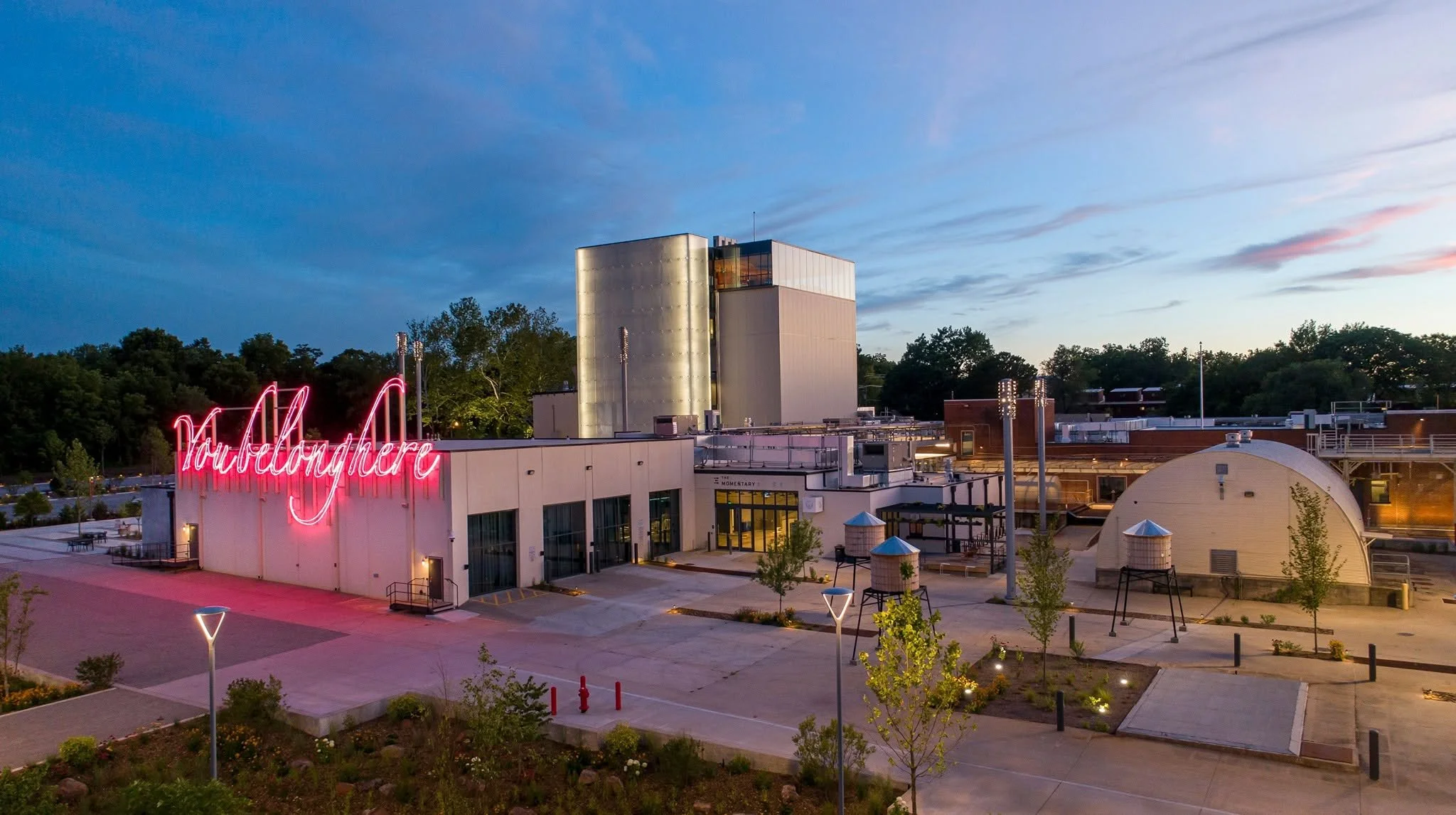
Crystal Bridges is a major museum of American art, founded by Alice Walton of Walmart fame in her family's hometown of Bentonville, Arkansas. The Momentary is its contemporary sister site, which turned a 63,000-square-foot cheese factory into a vibrant hub for performing arts and live music. I mean, where else would you put a concert venue, right?!
Crystal Bridges and the Momentary have incredible indoor and outdoor performance spaces to host the likes of Sierra Ferrell, Chris Lake, Big Thief, Zedd, Black Country New Road, and Chance the Rapper. New shows are constantly getting added to their event calendar.
Their standard event announcement sequence runs four to five days: announce, presale, and public on-sale. Artwork drops, social feeds light up, inboxes buzz, and a show nobody knew about now has its moment. But attention alone does not pay the bills…
The Challenge: Converting Awareness into Ticket Sales
Spotlighting a new show is table stakes. Fans first need to know an event exists before they can consider buying a ticket. No duh!
However, for Crystal Bridges, the Momentary, and countless other live event spaces, that attention creates thousands of clicks to a website without anything for visitors to actually do. Tickets are not yet available. It’s currently a dead-end.
Even worse, fans who show early interest and hit a roadblock will rarely come back on their own for the on-sale. That attention doesn't wait around. It scatters over the days before tickets are released. And when tickets finally do go live, event producers have to pay a second time to reach the same people they already had.
Zooming out further, that fan frustration can linger. If fan expectations aren’t met, it can negatively impact how they perceive the event property’s brand and they’ll think twice about purchasing tickets to future shows.
So, how could Crystal Bridges and the Momentary combat this common catastophe and convert more customers? Read on to discover how Bauer Entertainment Marketing rebuilt their announcement strategy with massive success.
The Solution: Making a Show Announcement Actionable
Think about how a record release works on Spotify. The album isn't out yet, and you can't play it, but none of that stops you from pre-saving it with one tap. So, the moment new music drops, it's already in your library. The commitment happens while interest is hot, and the platform closes the loop later. That is exactly the shape an event announcement needs.
For Crystal Bridges and the Momentary, that meant giving every announce something a fan could act on immediately. Their core audience lives on Instagram, so we leveraged an Instagram Reminder ad campaign. Here is how it worked:
One tap, at the moment of peak attention. Instead of asking a fan to remember a date, we told them to tap. Smaller ask than a ticket sale. More useful than a social post like.
Three touchpoints, handled by the platform. Everyone who opts in hears from Instagram the day before the on-sale, again 15 minutes out, and once more the second it opens. No one has to be at a desk that morning.
A paired Facebook Event Response campaign. Running against the same moment gave us a second net, catching fans who never saw the reminder ad.
A dedicated custom conversion, so orders placed after the on-sale traced back to the announce that created the intent.
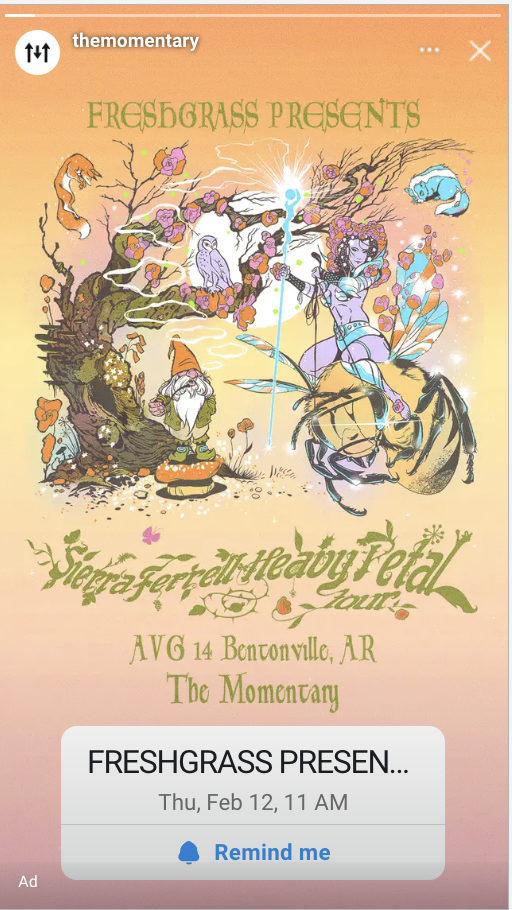
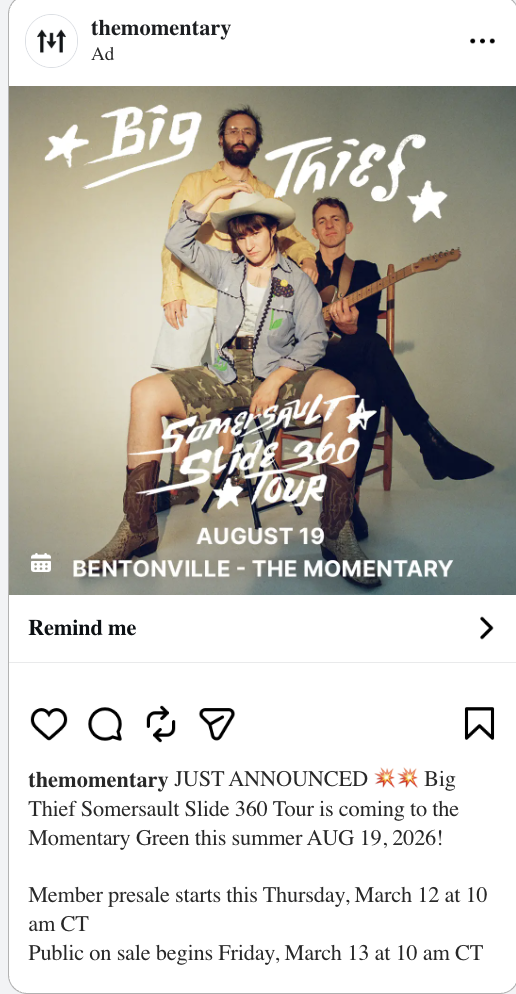
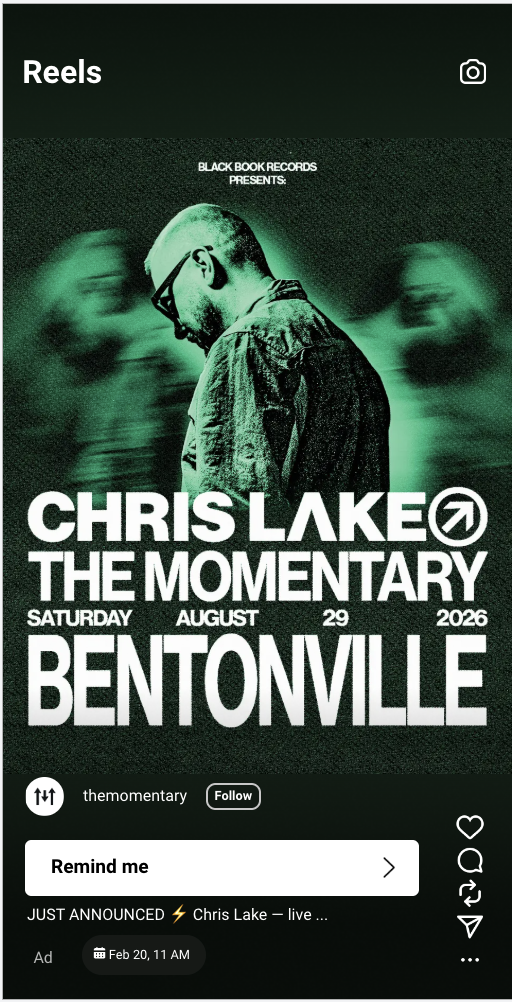
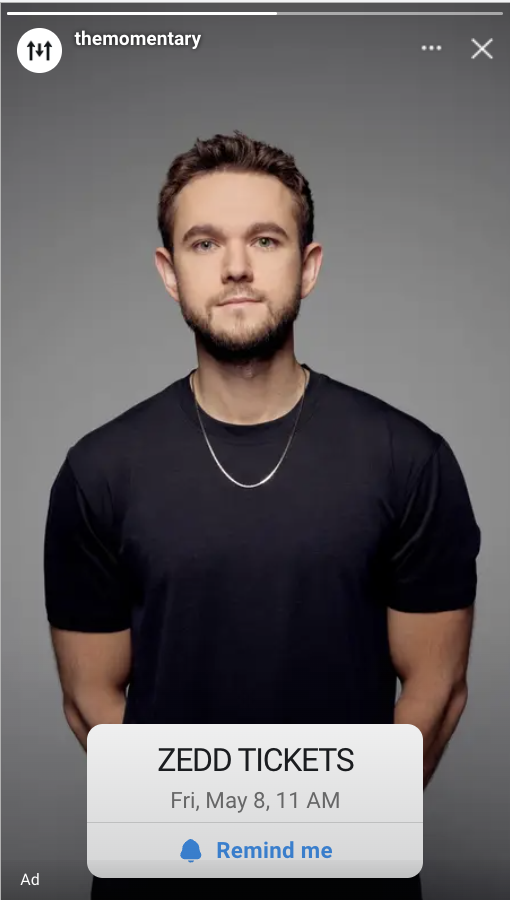
Reminder ads are one way to close that gap. They are not the only one. Email and SMS capture built around the on-sale does the same job, as do ticketing platform alerts and a win-it-before-you-buy-it contest. Some platforms now let customers store payment details in advance and automatically authorize purchases, eliminating the gated transaction timing entirely. The right channel is whichever one your audience already lives in. Anywhere they have to wait to buy, that wait is worth funding to eliminate.
The Results: 14.8X Return on Ad Spend
BEM’s reminder campaigns for Crystal Bridges and the Momentary returned an estimated 14.8X on ad spend, meaning every dollar spent on the reminder ads came back nearly 15 times over in ticket revenue. Every announce was profitable, and performance held up regardless of an artist's size or notoriety, making it as viable for niche and regional acts as for headliners.
Additionally, cost per opt-in turned out to be an extremely useful number, and not because it was low (it was). This metric was the earliest reliable signal of how an on-sale would perform. That gave us a reason to move budget while the on-sale was still ahead of us, making an even bigger impact.
Key Takeaways for Venue, Festival, Attraction, and Sports Marketers
Give the announcement something to do. A reveal with no action attached to it measures nothing, captures nothing, and sells nothing, no matter how good the artwork looks.
Run it where your audience actually lives. Instagram carried this because that is where Crystal Bridges and the Momentary’s audience was strongest. If your email list outperforms your social following, the same idea belongs in email. Follow the audience, not the format.
Treat cost per opt-in as an early detection system. It tells you how an announce is landing within a day of publishing it, which is early enough to shift budget before the on-sale rather than after it.
Report the announce separately. Fold it into a campaign average and it goes invisible, which means future campaigns go unfunded. Its own table is what turns a tactic into a repeatable line item.
Reuse the mechanic anywhere there's a deadline. Price increases, final release blocks, last-chance windows, renewal deadlines, and timed-entry releases all work the same way. Any moment your audience has to act on a specific day is worth capturing in advance.
Ready to Turn Announce Day Into Ticket Sales?
Whether it's shows, lineups, seasonal attractions, or a schedule release, if none of your announces produce anything you can count, we should talk.
Start with 3 free growth ideas, on us!